|
|
|
World War II in the Baltic
By Mike Hurtado
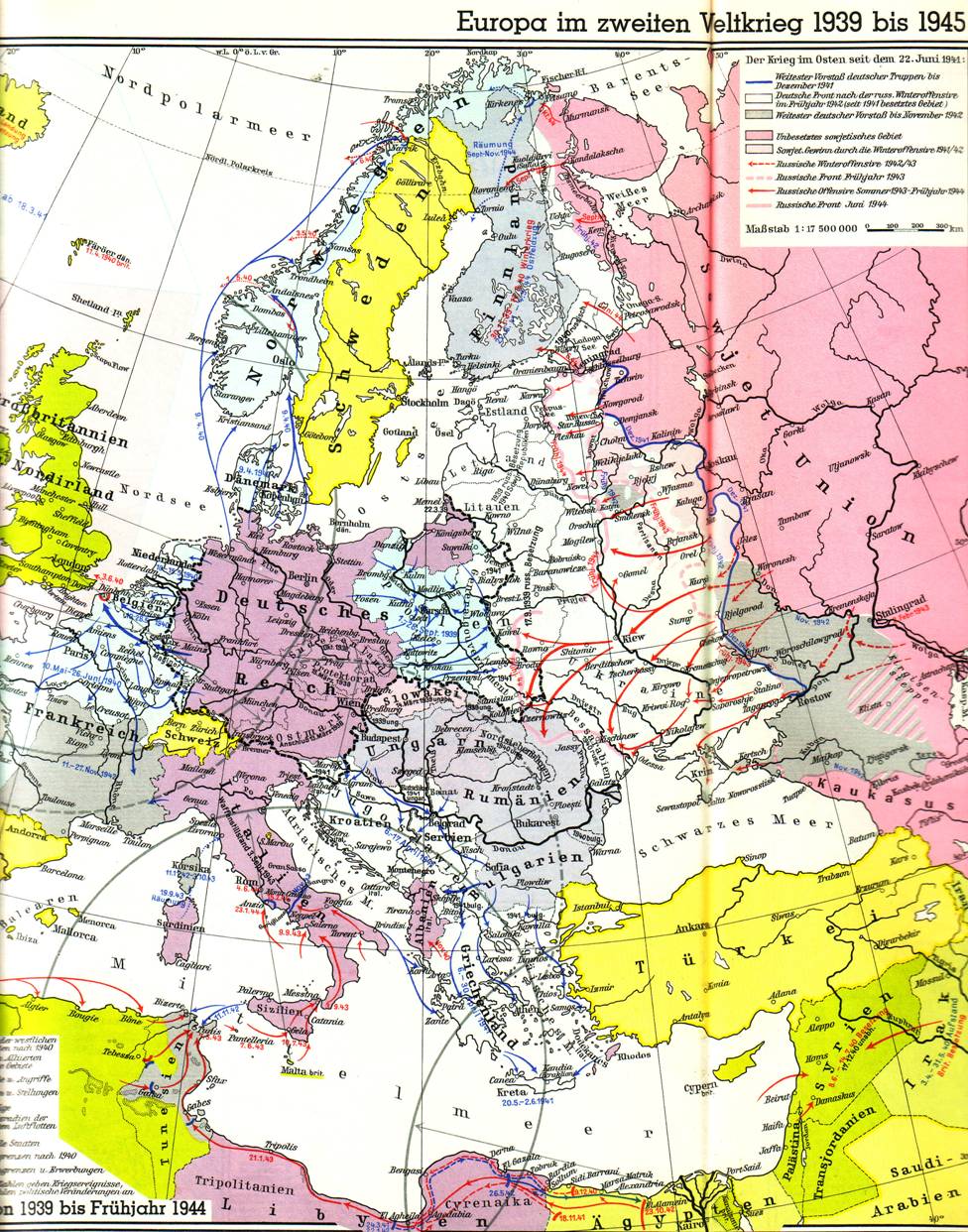
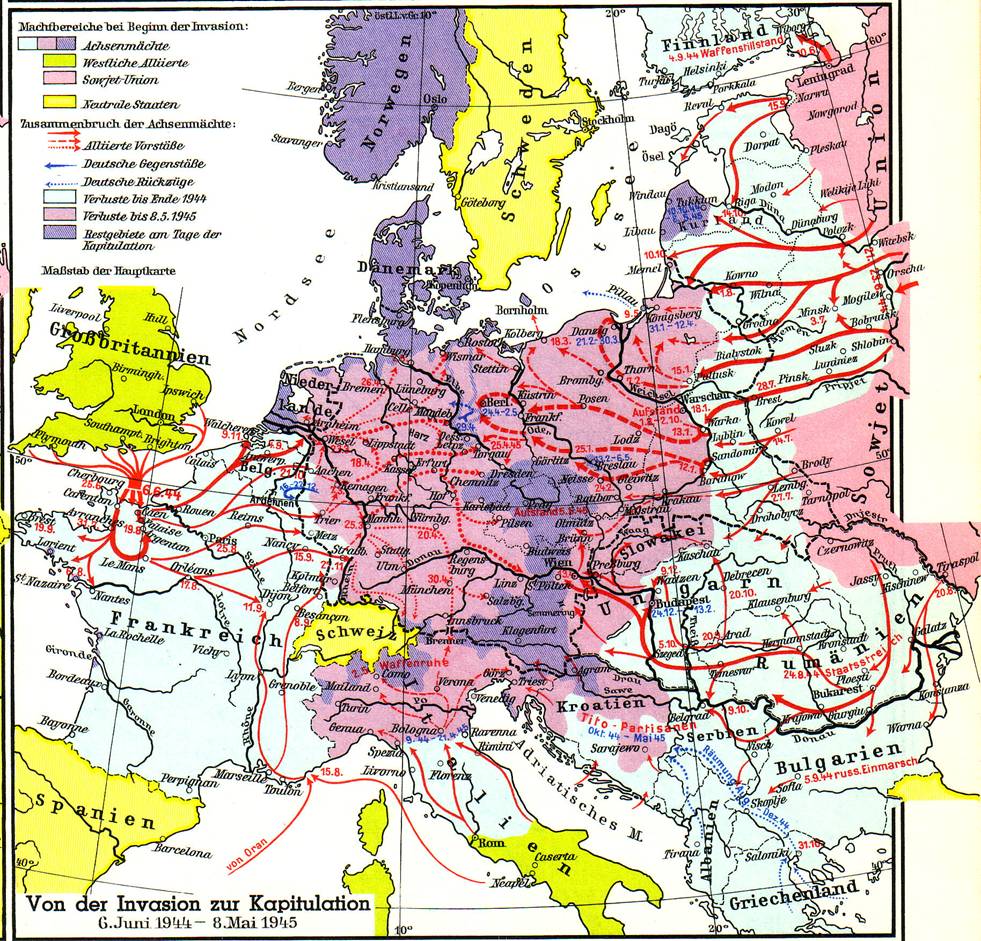
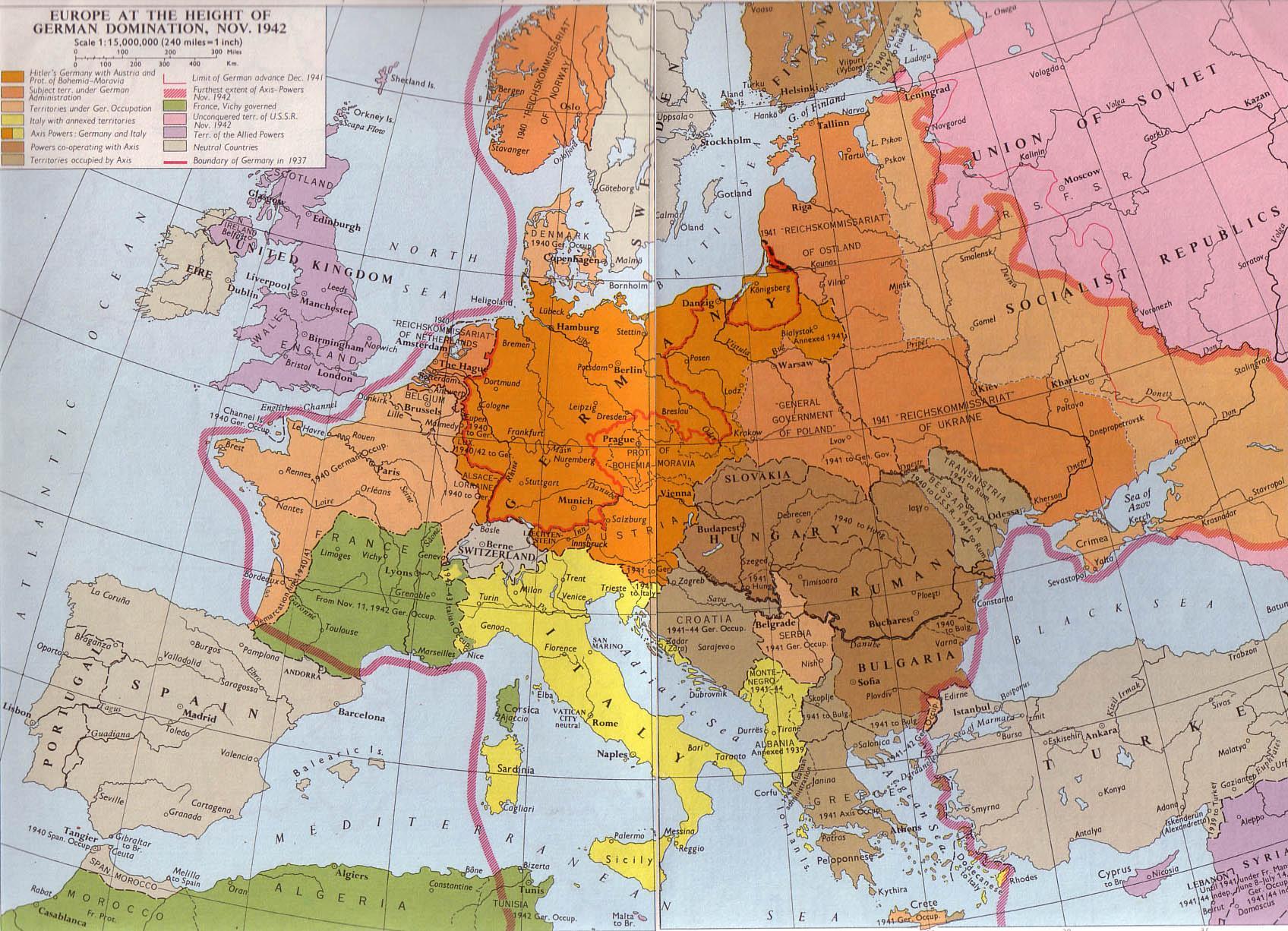
Maps: The New Cambridge
Modern History Atlas, Cambridge, 1970
Westemanns
Atlas zur Weltgeschichte,
Berlin,
1953
Graphics: Lado
Goudiashvili
|
Introduction
At the end of the 1930s, a game of
imperialism orchestrated through secret meetings and negotiations between
Hitler and Stalin lead to events that would rob Latvia,
Lithuania, and Estonia of
their national sovereignty. The Baltic would bear the brunt of international
tensions that gave rise to the Third Reich and the beginning of the Second
World War. First, as a pawn of Soviet national protection against the spread
of fascism, and then as satellite states of imperial Germany’s conquest, the
Baltic suffered horrendous losses to deportation, conscription into Germany’s
foreign legions, and an entire culture to the Holocaust. The seeds of
resistance to occupation planted at the beginning of World War II would
germinate between 1939 and 1944 as men and women took to the forests and
marshes to ward off oppression.
Molotov
- Ribbentrop
The threat of war in Europe
loomed heavily in the minds of politicians as the 1930’s neared an end. On
March 28,1939, Soviet foreign Commissar Maxim Litvinov sent a declaration to
the envoys of Estonia, and Latvia voicing Stalin’s concern over the potential
loss of the sovereignty enjoyed by the Baltic States to the possibility of a
third party occupation. Stalin feared that the Soviet
Union could not afford the loss of the Baltic to Hitler. The
Latvian and Estonian envoys replied to Livinov’s
declaration by stating that both Estonia
and Latvia
wished to remain neutral in the event of war.
In an attempt to distance the Soviet
Union from the growing sentiment of war between Germany
and the Western powers, Stalin denounced his relations with England and France and summoned the German
Reich to appropriate a non-aggression pact. To facilitate better relations
with Germany,
Stalin dismissed Commissar Maxim Litvinov, who was of Jewish lineage, and
replaced him with Vyacheslav Molotov on May 3,1939. Through Foreign Minister Ribbentrop, Hitler
recognized Stalin’s concerns and signaled a proposal for a series of secret
meetings to discuss the future of Finland,
Poland,
and the Baltics. In the negotiations, Stalin and
Molotov requested that Germany
not interfere with the Soviet militarization of Estonia,
Latvia, and part of Lithuania in return for the assurance that the
Soviets would not intervene in a German expansion into Poland. In
the early hours of August 24, 1939, the Molotov Ribbentrop treaty was signed,
thus sealing the fates of independent Latvia,
Lithuania, Estonia, Finland,
and Poland.
The dilemma faced by these countries can be best portrayed by statement given
by the Polish commander in chief, Marshal Edward Rydze-Smigly,
upon his refusal to allow Soviet troop movements within Poland,
"With the Germans we run the risk of loosing
our liberty. With the Russians we will loose our
soul." (Meissner 141)
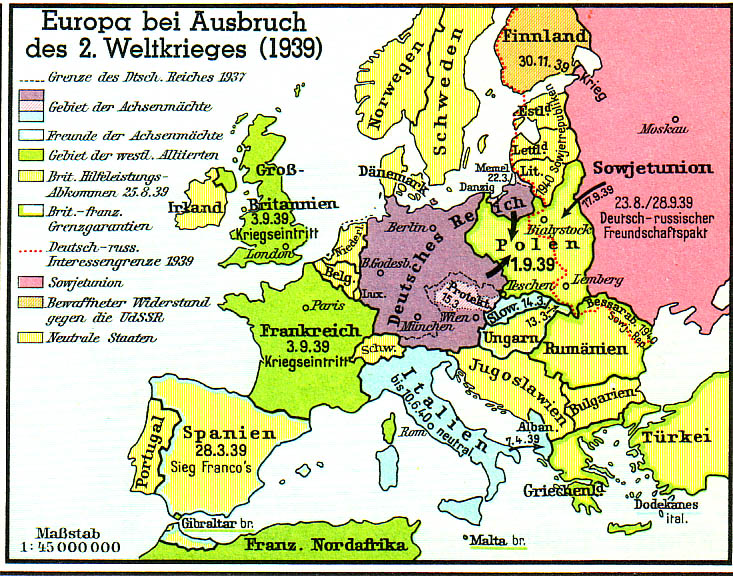
Implementation
of Molotov Ribbentrop
Hitler and Nazi Germany would
be the first to act upon Molotov Ribbentrop. On September 1, 1939, Germany invaded Poland,
followed by a Soviet offensive launched upon Poland’s eastern flank on
September 17, 1939. Warsaw
surrendered on September 27, 1939. Stalin now turned his interests to
claiming the Baltic as annexed states of the Soviet
Union.
On September 24, 1939, Estonian Foreign
Minister, K. Selter, arrived in Moscow for a meeting with Molotov. With
Soviet troops massed on Estonia’s
border and military reconnaissance planes patrolling regularly over Tallinn, minister Selter was given an ultimatum. Under the pretext of the
need for the establishment of Soviet military bases next to the Baltic Sea to
offer an adequate defense of Leningrad, Minister Molotov stated, "If the
Estonian government were to fail to admit of these necessary alterations, the
Soviet Union would be forced to carry them out otherwise, employing more
radical measures which might prove to be unavoidable." (Rei 260) On September 25, 1939, Minister Selter agreed to Moscow’s
demands. Latvia and Lithuania, given the same threat of invasion,
were summoned for meetings in Moscow
on October 2, 1939. Minister V. Munters represented
Latvia, and J. Urbsys represented
Lithuania.
Latvia signed the pact on
October 5, 1939 and Lithuania
on October 10, 1939.
Life During Soviet Occupation
Stalin had succeeded in attaining a
Soviet military presence in the Baltic States.
Stalin’s true intentions were to annex Latvia, Lithuania, and Estonia into
the Soviet Union. To achieve annexation, Stalin accused the Balts of conspiring to form a military alliance against
the Red Army. Stalin used this as a catalyst to order heavily armed Soviet
troops to stream into the Baltic States and
crush all resistance.
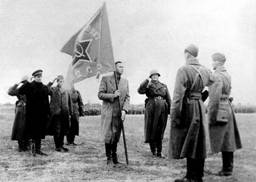
Between June 15, and June 17, 1940, the
Baltic had become immersed in the throngs of the Red Army’s occupational
forces. Stalin now sought puppet governments that would comply with the
demands of the Soviet Union. President Ulmanis of Latvia
and President Pats of Estonia
were immediately deported to the USSR,
while President Smetona of Lithuania
slipped into voluntary exile. The bank system, transportation system, all
industry, and mines were seized as property of the communist state. No one
was allowed to own property. In Estonia
and Latvia,
houses in which floor space exceeded two hundred and twenty square meters
were expropriated as property of the people. As of January 1, 1941, the
Soviet Ruble became the only means of tender in the Baltic.
The Catholic Church was persecuted by
the Soviet government and was forced to hand over all churches and property.
Seminaries and monasteries were converted into garrisons for the Red Army.
All religion was eliminated from the curriculum of local schools, as they
also suffered the fate of expropriation. Arrests and deportation of religious
activists followed as the Soviet Union
enforced Atheist propaganda throughout the Baltic.
The Soviet secret police, NKVD began
operations in June of 1940. An average of two to three hundred people per
month disappeared without a trace. By June 22, 1941, civilian losses due to
deportation, mobilizations, and massacres stood at sixty thousand in Estonia, thirty-five thousand in Latvia, and thirty-four thousand in Lithuania.
Many of those deported dies while in transit to labor camps.
The
German Occupation
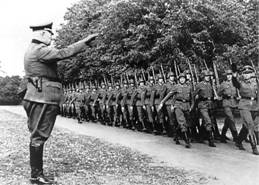
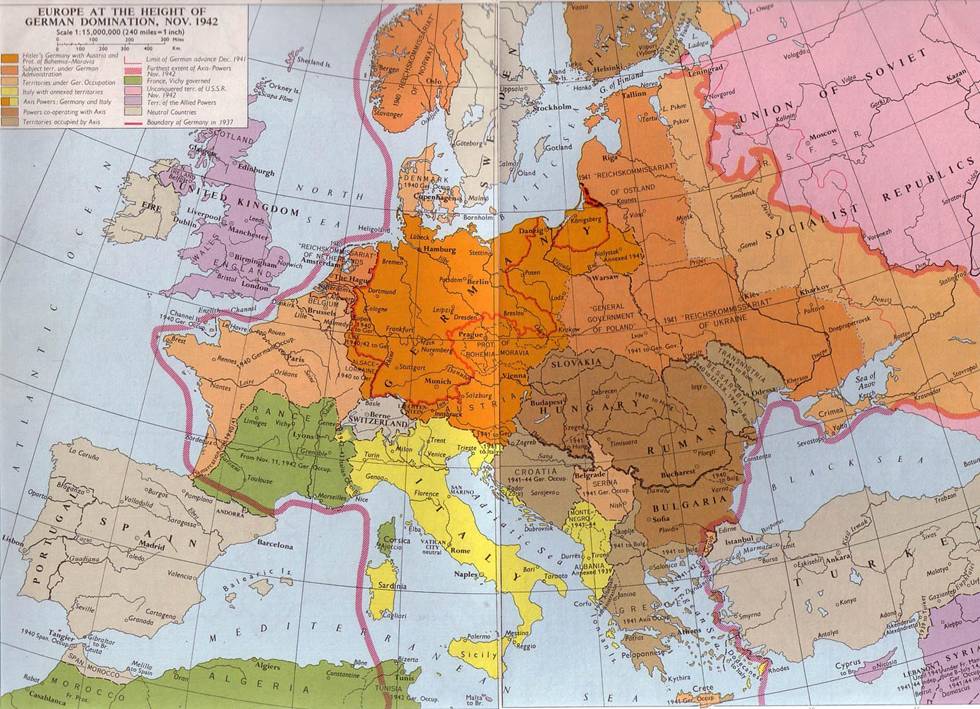
On June 22, 1941, the German army attacked
the Soviet Union. The German advance met little
resistance from the Red Army as Lithuania
in its entirety fell within three days of the initial assault, Daugavpils on June 26, 1941, Riga
on July 1, 1941, and Tallinn
on August 28, 1941. Latvia, Lithuania, and Estonia immediately set up
provisional governments in hopes that they would be acknowledged by the Nazi
leadership.
Any hopes of national independence were
dashed on July 28, 1941 as the Baltic countries and Belorussia were claimed as Germany’s Ostland, or occupied territory. Germany
appointed Heinrich Lohse as Reich Commissioner for
the Ostland. German officers filled the bulk of the
administrative positions in Ostland with exception
of a few ceremonial positions held by Baltic advisers. The German Mark was
instituted as the only means of currency on June 26, 1942 with an exchange
rate Rubles to one German Mark. The Reich appropriated all properties seized
by the Red Army. Rationing of foods and goods was implemented in the cities
as black markets flourished. Few newspapers were in circulation due to
censorship and paper shortages. Furthermore, Nazi control over the church was
relatively light as theological institutes were allowed to operate in Estonia and Lithuania
but not in Latvia.
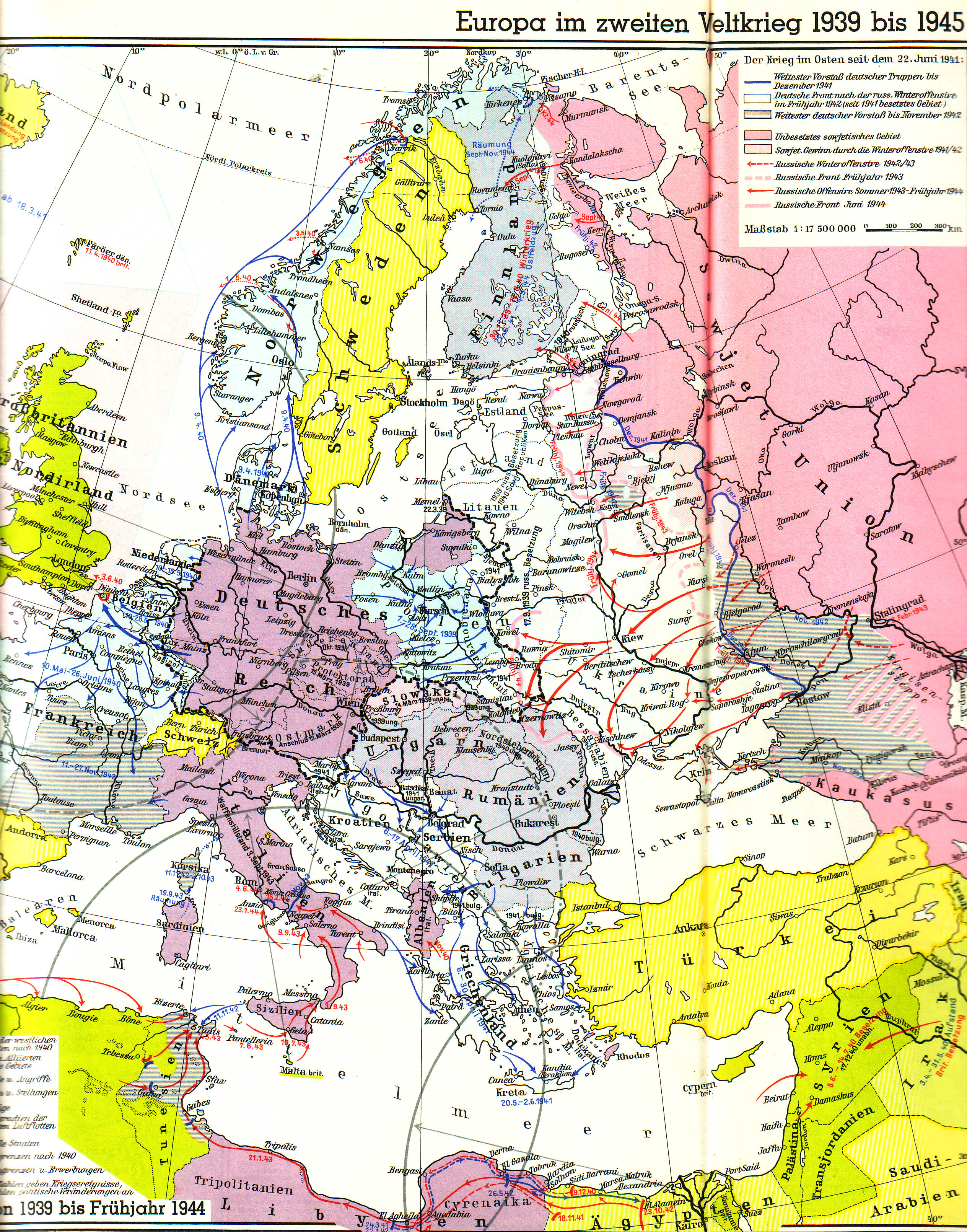
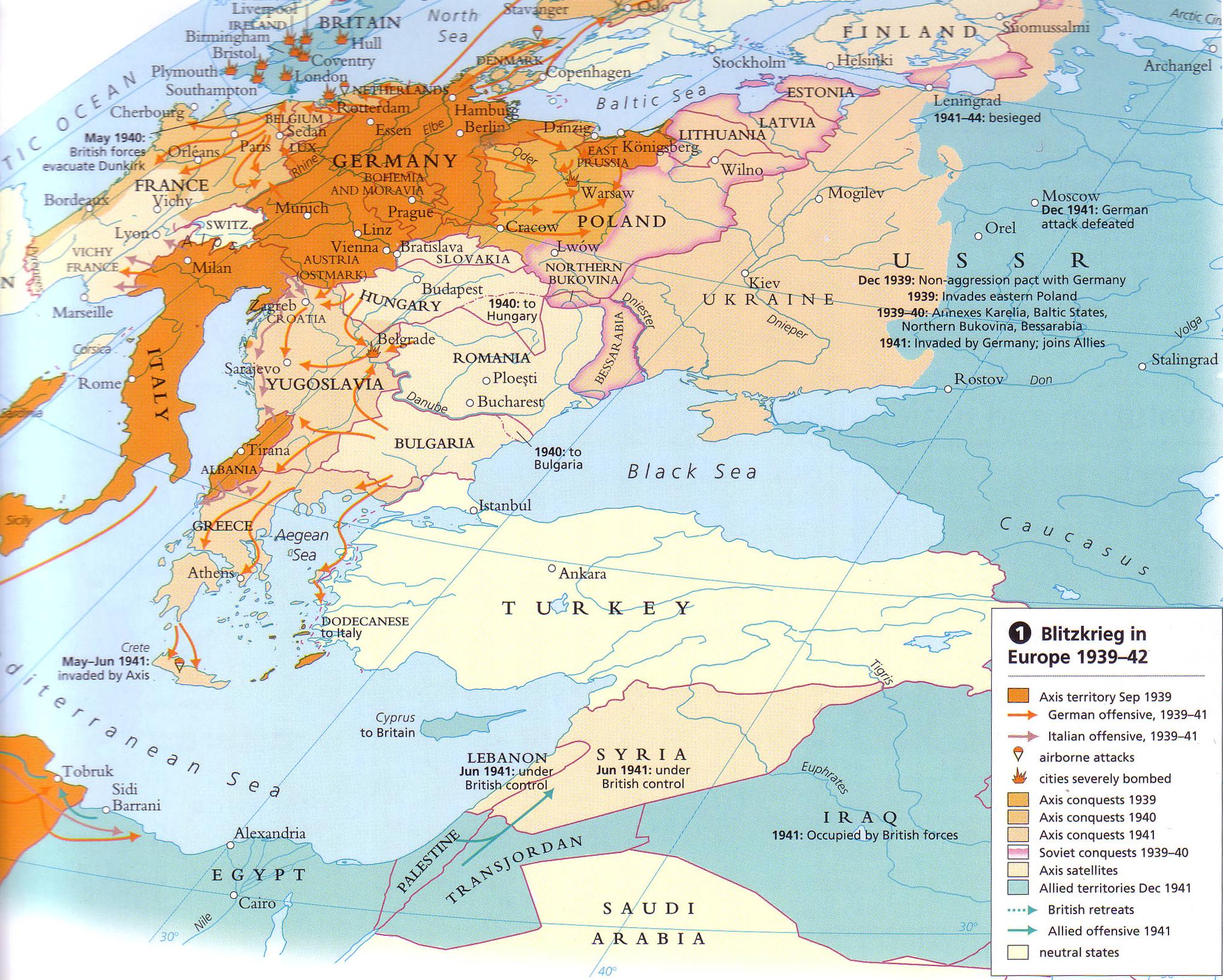
Click on the map for better resolution
The Baltic Legions
Germany first
tapped into the Baltic populations for labor and military service in
July of 1941. At first, the Nazis sought volunteers, but by December of the
same year, Reichminister of the occupied
territories, Alfred Rosenberg, issued a general draft for labor service. The
draft affected Balts between the ages of eighteen
and forty-five. An estimated one hundred and twenty-six thousand Balts had been shipped off to work in Germany.
The German military benefited from the
draft by conscripting Balts into defense
battalions. These units were mainly composed of Latvian, Lithuanian, and
Estonian Sovietized armies that surrendered upon
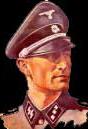
the German occupation. Waffen SS National Legions
were formed in Latvia and Estonia
between the fall and spring of 1942. These units saw service in Poland, Yugoslavia,
and Italy.
German attempts to raise a Lithuanian branch of the SS failed, but the
formation of a Lithuanian defense force with thirty thousand inductees was
established. The Lithuanians disbanded their ranks in May of 1942 and
disappeared into the surrounding forests. General Plechavicius,
commander of the defunct defense force, and approximately one hundred members
of his staff were arrested and summarily executed.
Holocaust
Advanced elements of the German Einsatzgruppen and Sicheheitdienst
quickly filled the void left by the advancing Wehrmacht
with the purpose of eliminating local resistance and collecting the Jewish
populations for extermination. Upon the Soviet retreat from the Baltic, local
mobs roamed the cities and countryside venting their hatred of the Bolsheviks
on anyone considered to be their sympathizer. In many cases Jews were
targeted as well. This behavior can be attributed to the misconception of the
Jewish population as supporters of the Sovietization
of the Baltic. Reichminister Alfred Rosenberg
ordered the institution of ghettos, where the mass murder of the Jewish
inhabitants occurred. The largest ghettos were in Salaspils, Latvia,
Klooga, Estonia, Ninth Fort,
Lithuania, and Aukstieji Paneriai, Lithuania.
Small groups of Baltic population
volunteered to help the Nazis in their task of purging the Baltic of its
Jewish population. hese
volunteers were organized into Teilkommando/Einsatzkommando units with the instructions to perpetrate
mass executions upon the people who had been housed in the ghettos. At the
same time, many other ethnic Lithuanians, Latvians, and Estonians as well as
Germans, Poles and other local residents tried to hide their Jewish neighbors
or help them escape putting at risk both themselves and their families. By January 1,1942,
Estonia
was proclaimed free of all Jews. By the time the Soviets reoccupied the Baltics, an estimated one hundred and seventy thousand
Jews had been murdered in Lithuania,
eighty thousand in Latvia,
and five thousand in Estonia.
Twenty-five thousand ethnic Latvians, Lithuanians, and Estonians perished at
the hands of the Einsatzgruppen, and approximately
ten thousand were sent to concentration camps in Germany.
The Soviet Union
collected enormous amounts of German documents containing evidence of war
crimes perpetrated by the Nazis and their killing squads. The Soviets also
relied upon testimonies obtained by survivors, both Jewish and ethnic Balts, and from refugees that had emigrated during the
war to seek the arrest and trial of those incriminated in war crimes. The war
crimes tribunal at Nurnberg, following the
end of World War II, resulted in the conviction of several German military
officers and the indictment of members of the Einsatzkommando.
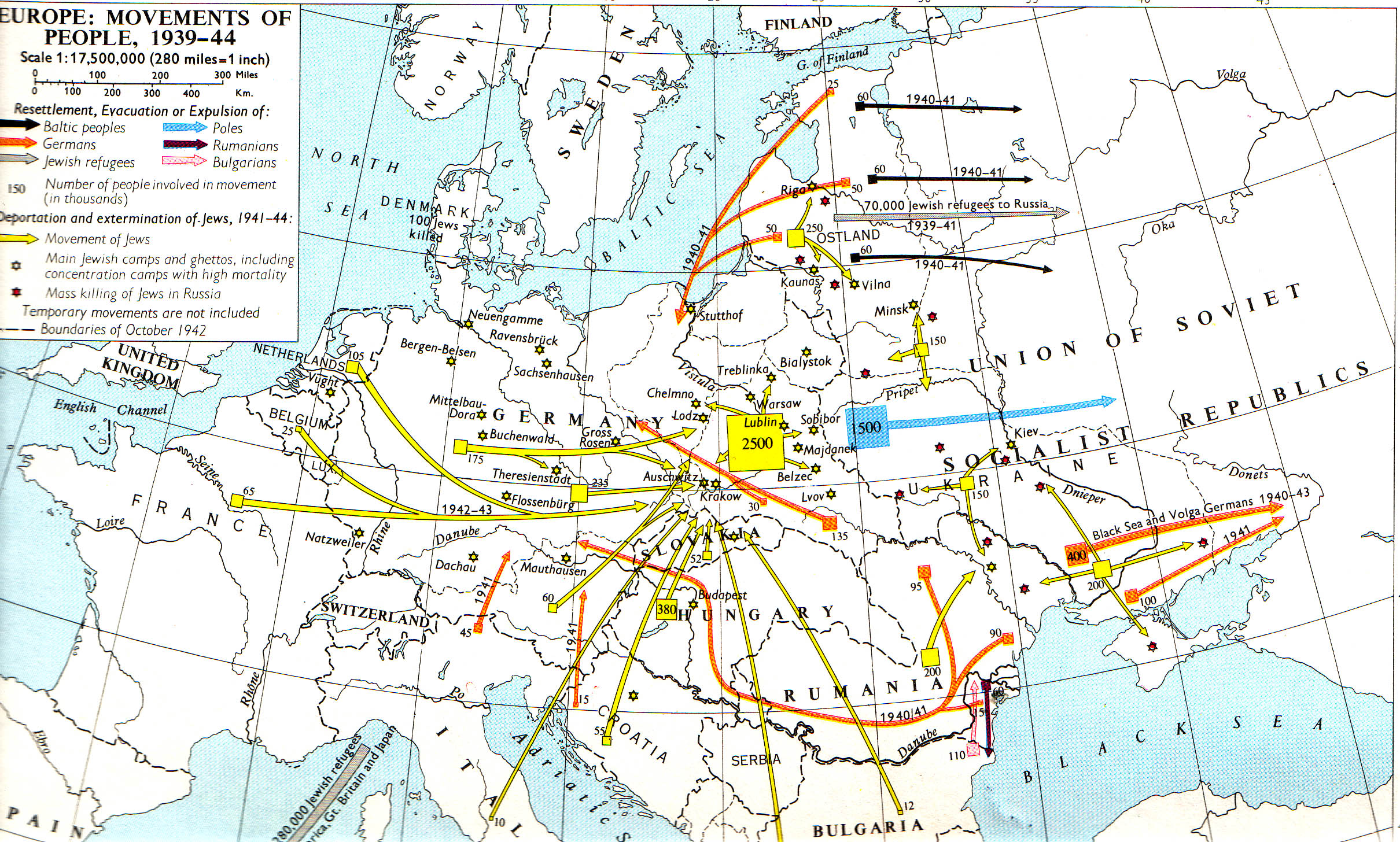
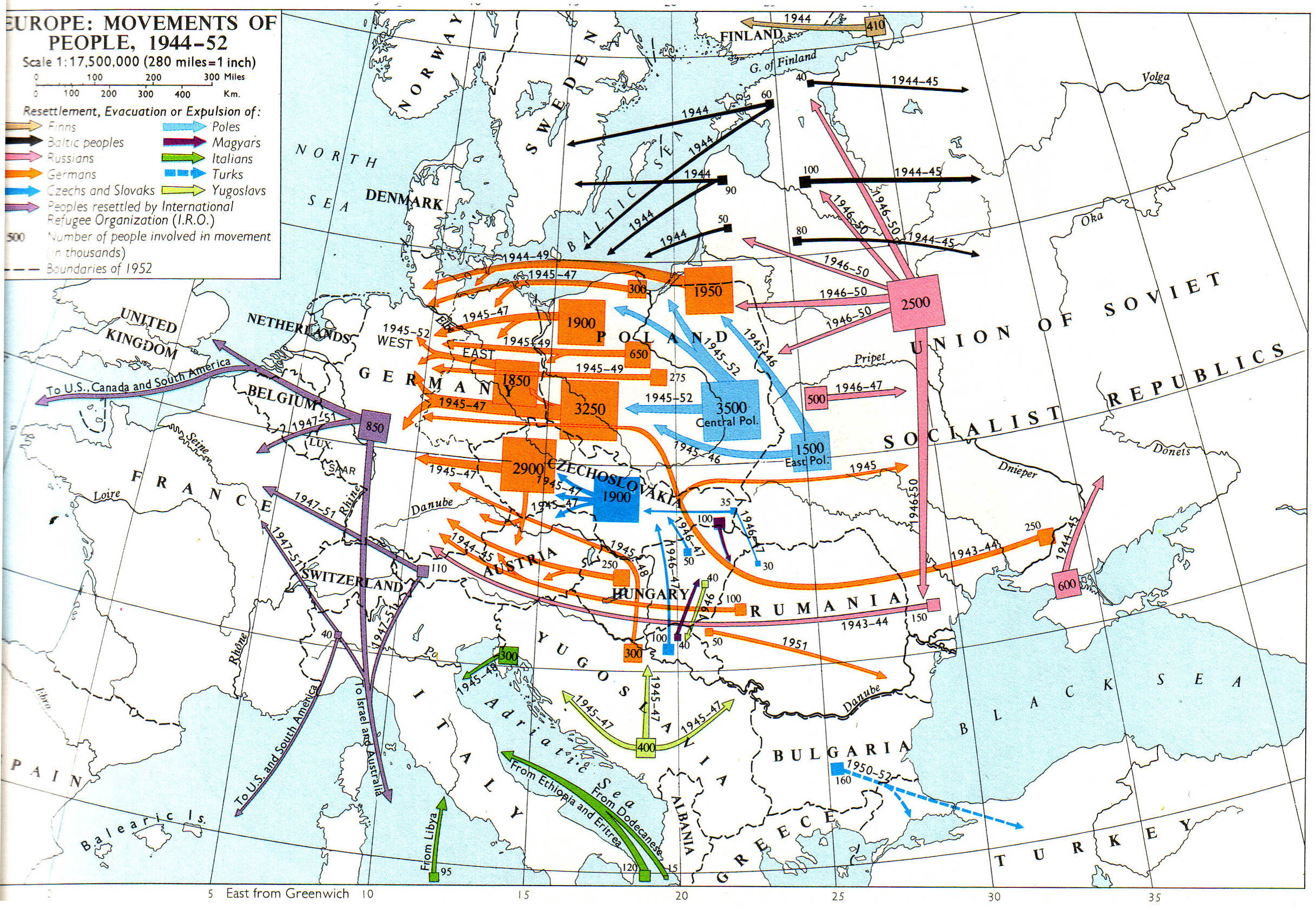
(Click here for more information re. the
deportations of people in 1939-44)
The Fall of the Third Reich and the
Rise of The Forest Brethren
On January 20,1944,
the Red Army launched an offensive against the Wehrmacht
at Narva,
Lithuania. By
July of 1944, the Red Army breached the German front lines on the Lithuanian
frontier. The Soviet Union occupied most of
the Baltic by the fall of 1944. Looting, rape, and summary executions
followed the fluctuating front lines as the Red Army contained German units
in Courland.
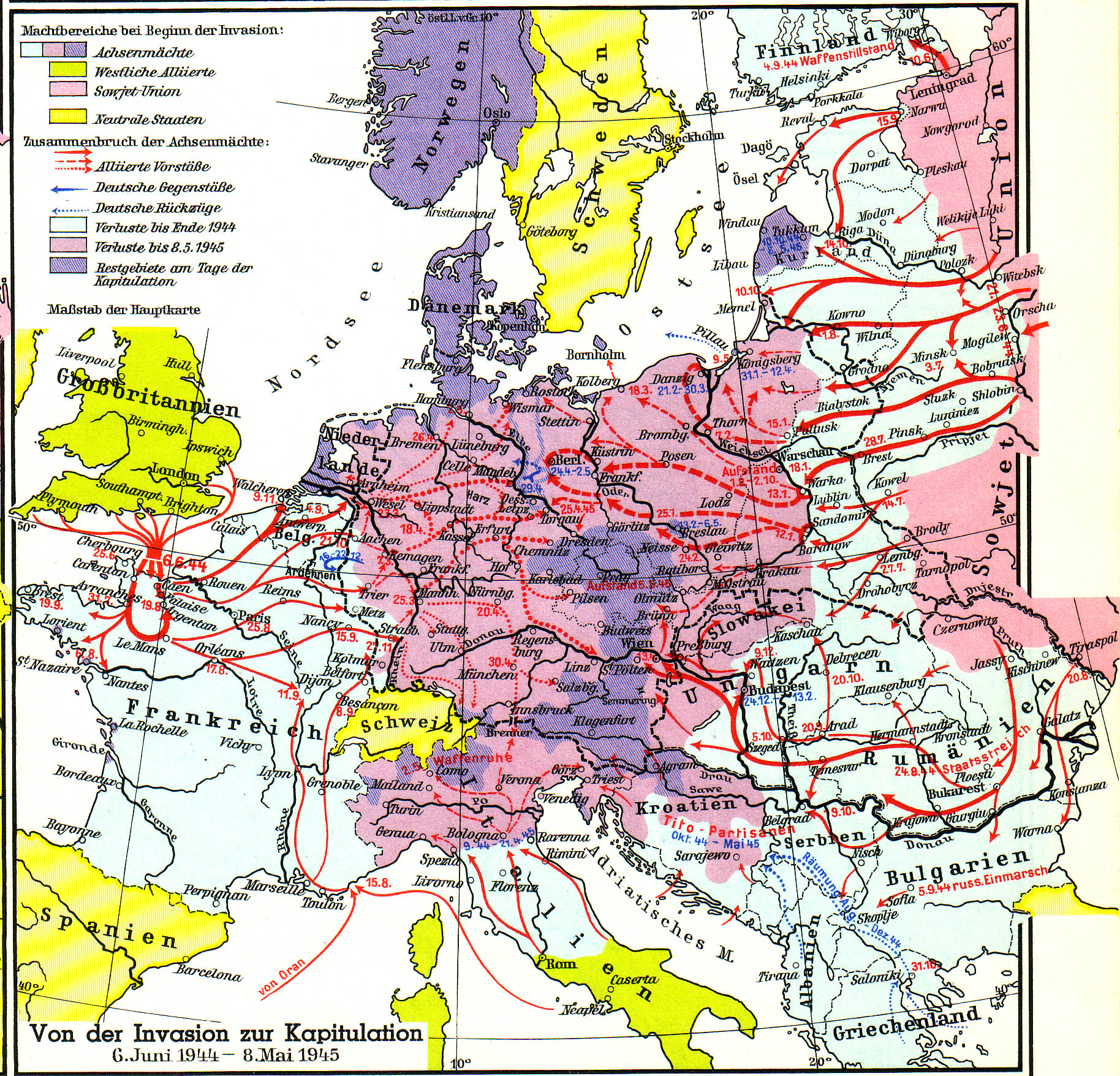
Click on the maps for better resolution
The forests and marshlands of Latvia, Lithuania,
and Estonia
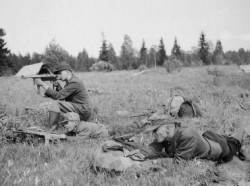
became breeding grounds for resistance to the Soviet occupation. Many members
of the Baltic Legions and other people who were afraid of the Soviet secret
police dissipated into the countryside. In conjunction with established
partisan groups, Baltic Legionnaires conducted armed operations against the
occupying Red Army. The partisan units became known as The Forest
Brethren. The ranks of The Forest Brethren swelled as the Soviet forced deportation and
conscription upon the populations of the occupied Baltic
states.
A westward bound exodus of
refugees streamed out of the Baltic as Germany unconditionally
surrendered to the allies on May 7,1945. Detachments
of the Soviet secret police, NKVD, raced to stave the flow of refugees in
hopes of capturing members of the Baltic Legions and charge them with war
crimes. Several rounds of deportations were implemented in post World War II Latvia, Lithuania,
and Estonia
to cleanse the population of any resistance to the Soviet domination. The
flames of war smoldered as armed conflict flickered between the Forest Brethren and the Red Army throughout the 1950’s.
Bibliography
- Andrew
Ezergailis, "War Crimes evidence From
Soviet Latvia,"
Nationalities Papers, volume XVI (Fall 1988) : 209-222
- August
Rei, The Drama of the Baltic Peoples (Finland:
Publishing House Kirjastus Vaba Eesti, 1970) ,
259-353
- Boris Meissner, "The Baltic Question in World
Politics," The Baltic States
in Peace and War (The Pennsylvania State University Press, 1978) ,
139-148
- Dennis
J. Dunn, "The Catholic Church and the Soviet Government in the
Baltic States, 1940-41," The Baltic States
in Peace and War (The Pennsylvania State University Press, 1978) ,
149-158
- Georgy A. Kumanev, "The Nazi Genocide of the Jewish
Population on the Occupied Territory of the USSR," Soviet
Jewish Affairs volume 21(Summer 1991) : 59-68
- Nicholas Lane,
"Estonia
and It’s Jews: An Ethical Dilemma," East European Jewish
Affairs volume 25(Summer 1995) : 9-15
- Romuald J. Misiunas and Rein Taagepera,
The Baltic states Years of Dependence 1940-1980 (Berkeley, Los
Angeles, 1983) , 15-91
- Romuald J. Misiunas, "Soviet Historiography on World War
II and the Baltic States, 1944-1974," The Baltic
States in Peace and War (The Pennsylvania State
University Press, 1978) , 173-196
- Saulius Suziedelis, History and Commemoration In the
Baltic: The Nazi- Soviet Pact, 1939-1989 (Chicago: Published by
Lithuanian American Society, 1989) , 17-57
- Toivo U. Raun,
Estonia
and the Estonians (Stanford, California: Hoover
Institution Press, 2001) , 174-175
Originally
published at http://depts.washington.edu/baltic/papers/
BACK TO THE
BALTIC STATES
|

 THE BALTIC LEGIONNAIRES: WHY
DID THEY PUT ON THAT UNIFORM?
THE BALTIC LEGIONNAIRES: WHY
DID THEY PUT ON THAT UNIFORM?