The Protestant Reformation brought
about great change in the Baltic Region of Europe. Effects in religious, social, and political
aspects of life occurred, as well as an impact on education and language
development. Language development was
enabled in local vernaculars because of religious services held in local
languages and the translation of works and printing of books. The Counter Reformation occurred in the
southern Baltic region, with a focus on the Grand Duchy of Lithuania. This movement against the Reformation
pushed Roman Catholicism and attempted to regain the powers lost by the
Church. A power vacuum was created
after the Livonian Order fell apart, a result of the Reformation, and the
Livonian War ensued. In following
years governments and countries were shaped by religion. Various other religions were established as
well, with Luther’s teachings leaving their mark well past Luther’s own
existence. Life before the
Reformation The religion of
most people in Russian-Orthodox
Missionaries brought Christianity from the east. In the 1160’s western Catholicism came to
what are now known as Estonians and Latvians.
In 1198 the Baltic Crusade was proclaimed and a crusading army was
established in the Baltic. This
organization of German speakers had fought in the Crusades for Christianity,
but wanted to obtain land of their own as well. There were two main organizations, the
Teutonic Order and the Brethren of the Sword.
By 1236, the Sword Brethren allied with the Order of the Teutonic
Knights and became known as the Livonian Order of the Teutonic Knights. By 1500, two main territories existed in
the territory of present-day Nobility took
control of the land in the area and established serfdom. The religious practices in the areas were
in two main groups. There were the
German or Polish speakers, who were the nobility and upper class
(landowners), and then there were the native speakers (of the local
vernacular). The nobility was Roman
Catholic and that influenced the practices of others in the area. Serfs were forced to follow the religion of
the ruling class, which included going to church and such. However, serfs still practiced paganism
even though they were forced to follow something else. The Reformation in The Reformation in western/central Europe
officially began in 1517 with Martin Luther (1483-1546) and his 95
Theses. This was a debate over the
Christian religion. At the time there
was a difference in power. Roman
Catholicism stands with the Pope as central and appointed by God. Luther’s arguments referred to a direct
relationship with God and using the local vernacular to speak to the people
(in sermons, etc.). Luther’s arguments
remove the absolute power from the Pope and the Roman Catholic Church in
general. The revenue from the taxes
paid to the Church would be reduced with Luther’s ideas, in part because of
the removal of buying souls out of purgatory.
If purgatory exists, then the Pope should empty it out of goodness and
love, and not for the reason of money.
There is also the removal of the power of buying one’s pardon (and
with it salvation) from the Church.
The focus shifts from buying pardons to spending that time and money
for works of mercy and love. Overall
this presents an argument that removes the infallibility from the Pope and as
a political entity, the Church loses monetary funds
and power in general. The Church, while
losing power over the masses of people, also lost political power. Previously taxes were collected from the
people (peasants to landowners) and paid to the kings, who in turn paid the
Pope. In return they received monetary
assistance when needed, as well as the international prestige of the Church. Now there were options. Kings could still collect taxes from their
subjects, but it was not required that the Church be paid as well. The money could be used at the discretion
of the king. This was related with
countries becoming wealthy enough to defend themselves against the Pope’s
army, insuring their independence (the kings’, not subjects’
independence). Countries become
independent entities in and of themselves, not relying on the Pope’s
protection but having the ability to raise their own armies. The Reformation in the Baltic The Reformation resulted
in great change in the Baltic. Ideas
entered the Livonian Confederation very quickly and by the 1520’s they were
well known. Language, education,
religion, and politics were greatly transformed. The Church services were now given in the
local vernacular, instead of Latin, as was previously used. Instead of being forced to only attend
rituals, understanding of what was being said came about. Even though the peasantry did not have a
choice in their official religion (they followed what the nobility followed
at the time) they were able to comprehend the services now that they were no
longer in Latin. The Bible was
translated into the local languages as well (Old Testament published:
Estonian 1739, Latvian 1694, Education also
improved over time. Universities were
established for translation of texts and overall higher education. The first university was the Religion overall
was transformed as a result of the Reformation. The Baltic Provinces became Lutheran while
GDL remained Roman Catholic. However,
the Counter Reformation influenced the continued position of GDL in regard to
religion. The Counter Reformation The Counter
Reformation began in Livonian War (1558-1583) The Livonian War began when Ivan IV (a.k.a. Ivan
the Terrible) invaded in 1558. He
defeated the Livonian Order, which was already unstable because of the
Reformation. In 1525 the Master of the
Order Walter Von Plettenberg converted himself and
the Order to the Lutheran faith. The
Order was unstable because of the religious conversion, as well as the fact
that their power had been reduced in previous years (in 1410 the Teutonic
Knights were destroyed by the Grand Duke of Lithuania in GDL). The Livonian Confederation (knights, cities
and merchants, and Roman Catholic Church) disintegrated in 1561. Officially the Livonian War ended in 1583
with GDL and most of Role of Government The role of
government in religion was a large one.
There was one official religion for the country and the people
followed it. As was the case before,
the upper classes followed the religion while law to follow the religion of
their masters mandated the peasantry.
Even so, good did come out of government. One example is with the rule of Religious Variants In the years
following the Reformation other religions were formed. Some were Pietism (general term used to
describe the trends in the church stressing an individual relationship with
God), the Moravian Brethren (1700s), and Calvinism (began in 1500s and grew
as a religion in later centuries). The
Moravian Brethren felt that Protestants and Lutherans did not do what they
set out to do during the Reformation, which was to bring religion to the
common people. The Reformation was a
movement of the upper class. This
religion used the philosophy of equality between everyone. The individual relationship with God was
the most important. This religion
encouraged education, literacy, and social work. In these regards, it had a positive
influence on language and communities in general, when it was allowed in the
area (the Moravian Brethren were banned for many years in the eighteenth
century). The Reformation was
a major turning point in the Baltic.
It transformed the social structure and helped develop the local
languages. A rise in education was in
part a result in the printing of texts in local vernaculars. Overall the powers of the Roman Catholic
Church and the Pope diminished. There
was not necessarily a freedom of religion, as typically there was an official
religion of the government, but choice was in the area. (Click on
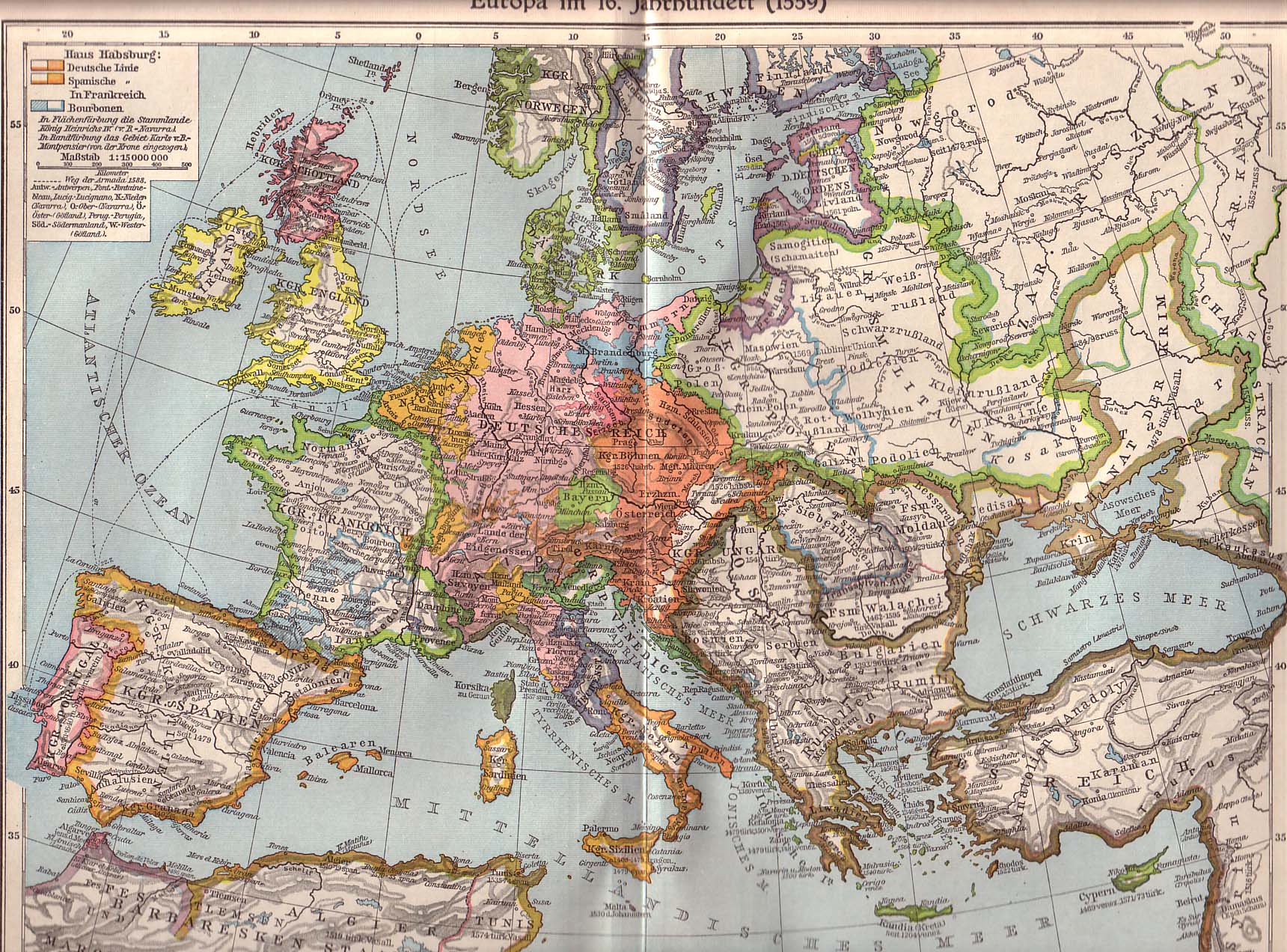
the map to see the full-screen image)
Bibliography Musteikis, Antanas. "The Reformation in Lithuania". Monographs, 1988 A small but good
book dealing with Lithuania. A basic
history is given of both society and the religious beliefs. There is a major focus on the social
effects of both the Reformation and the Counter-Reformation in the
country. There is acknowledgment of
various problems with studies of this type (religious) and suggests how they
are to be dealt with. Packull, Werner
O. "Sylvester Tegetmeir, Father of the
Livonian Reformation: A Fragment of His
Diary". Journal of Baltic Studies 16(4): 343-355. An article focusing
on influences of the Reformation.
Political and social backgrounds are given of Plakans, Andrejs. "The Latvians". Stanford: 1995. Two short sections
pages 30-40 on the Reformation and Counter-Reformation. Good for a short overview. Includes different groups resulting from
the Reformation. Raun, Centuries". Journal of Baltic
Studies 10(2): 115-126. An article focusing
on factors influencing literacy rates in Udrenas, Nerijus. "Women in the Ethnic Processes of Sixteenth
Century A general overview
of women’s' social and legal positions in the Grand Duchy of Lithuania prior
to and during the Reformation. Their
roles are examined regarding religion and the household. It seems to focus on the landowners and
serfs are not mentioned. However,
their legal rights are described and how they compared to others in Internet sources http://www.icc-info.lv/all/history.htm The site of All
About Latvia …a reference book on the net was last copyrighted in 1998 by the
International Co-operation Centre and this page focuses on http://vernet.lv/VT/history.html “ http://www.newadvent.org/cathen/127oob.htm “The Reformation” from the Catholic
Encyclopedia Volume XII was written by J.P. Kirsch and was published in http://www.wcer.org/members/europe/Lithuania/history.htm The World Congress
of Ethnic Religions has an article by Audrius Dundzila, Ph.D. It
provides an overview of religion in http://www.fordham.edu/halsall/sbook1y.html The Internet
Medieval Sourcebook, with site design by Paul Halsall,
was last updated 1/20/1999. It
provides texts of letters (translated) on various subjects. http://history.hanover.edu/early/prot.html The Protestant
Reformation was last updated 07/17/1998.
It contains links to various texts and is sorted by author and reformation. It also has various articles, essays, and
resources. http://www.iclnet.org/pub/resources/text/wittenberg/luther/ninetyfive.txt Martin Luther’s 95
Theses http://dosfan.lib.uic.edu/ERC/bgnotes/eur/estonia94.html ERC of US
department of state on Estonia, including a history of the region. http://www.ukans.edu/kansas/orb/encyclop/religion/monastic/opsahl1.html Information on the
Teutonic order. Originally
published at http://depts.washington.edu/baltic/papers/
|